Professional Remote Monitoring & Management
The definitive engineering course for IT professionals seeking to master proactive infrastructure oversight using the Atera ecosystem.
INITIALIZE ENROLLMENT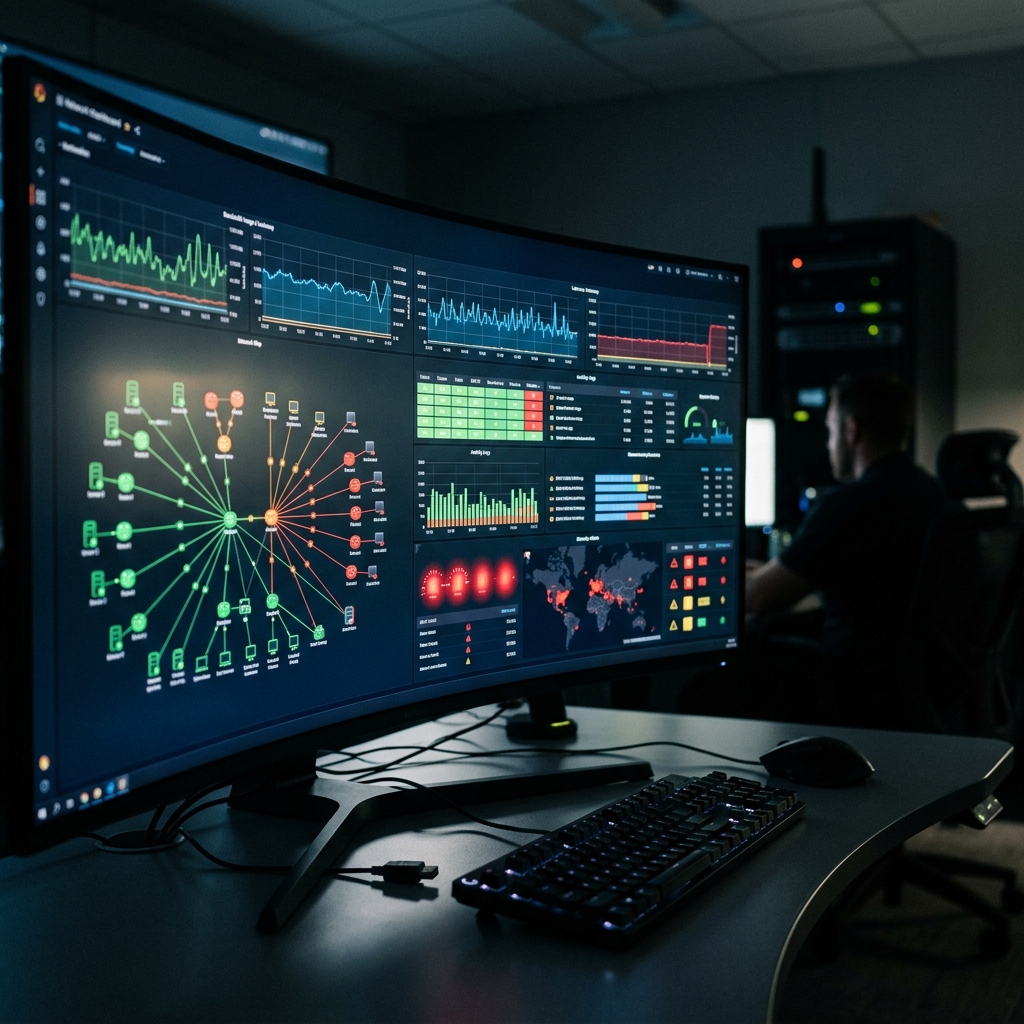
The Shift to Proactive IT Orchestration
In the modern digital landscape, the "break-fix" model is no longer a viable strategy for IT service providers or internal departments. As organizations scale their infrastructure across hybrid clouds, on-premise servers, and remote workstations, the complexity of maintaining uptime grows exponentially. Our Professional Remote Monitoring & Management (RMM) course is designed to transition engineers from reactive troubleshooting to a proactive state of total infrastructure awareness.
Remote Monitoring and Management isn't just about knowing when a server is down. It's about predicting failure before it happens, automating the mundane tasks that consume 80% of an engineer's time, and providing a seamless security layer that protects every endpoint regardless of its location. By focusing on the Atera platform, we provide a unified view into the health, performance, and security of entire networks through a single, powerful pane of glass.
This training dives deep into the architecture of modern RMM systems. You will learn how to architect an agent-based monitoring environment that scales from ten endpoints to ten thousand. We explore the nuances of SNMP monitoring for network hardware, the intricacies of WMI for Windows environments, and the power of shell scripting for Linux nodes. This is not just a tool-based training; it is a fundamental shift in how you perceive and manage the digital assets under your care.
Mastery Syllabus: Five Core Pillars
Module 1: Infrastructure Discovery
Every successful monitoring strategy begins with visibility. In this module, we cover the deployment of the Atera agent across various operating systems, including silent installation techniques for Windows, macOS, and Linux. You will learn how to use network discovery tools to scan subnets and identify rogue devices that haven't been brought under management.
We also delve into organizational structures, teaching you how to build a logical hierarchy of clients, sites, and departments. This ensures that your monitoring policies are applied correctly and that your reporting data provides meaningful insights to both technical teams and business stakeholders.
Module 2: Advanced Telemetry & Alerts
Data without context is noise. This module teaches you how to define custom monitoring thresholds that reflect the real-world performance needs of your clients. We cover CPU/RAM utilization, disk health, service availability, and event log monitoring. You will learn the art of "Alert Tuning"—reducing the noise of non-critical notifications while ensuring that high-severity issues are prioritized and escalated immediately.
You will also learn how to create custom SNMP monitors for switches, firewalls, and UPS systems, bringing your entire network stack into the unified dashboard. This module is critical for achieving a true "Zero-Trust" monitoring posture.
Module 3: Patch Orchestration
Vulnerability management is the cornerstone of cybersecurity. In this module, we focus on the automation of Windows and third-party software updates. You will learn how to design patch policies that balance security with stability, implementing test groups and approval workflows that prevent "bad patches" from causing widespread downtime.
We explore the integration of Atera's patch management with leading software repositories, ensuring that critical applications like Chrome, Zoom, and Adobe are kept current without manual intervention. Learn to generate compliance reports that prove your endpoints are secure and up-to-date.
Module 4: Scripting & Automation
True efficiency comes from automation. We teach you how to leverage the Atera script library and build your own custom automations using PowerShell, Bash, and Python. From automated disk cleanup to complex user onboarding workflows, you will learn how to turn manual checklists into "one-click" actions.
We also cover the implementation of automation profiles—scripts that trigger automatically in response to specific monitoring alerts. Imagine a system that detects a stalled print spooler and restarts it without human intervention, resolving the issue before the user even notices a problem. That is the power of RMM automation.
Module 5: Security & Remote Support
When monitoring fails, remote access is the second line of defense. This module covers the secure use of remote desktop tools (AnyDesk, Splashtop) within the RMM console. Learn how to maintain a secure audit trail of remote sessions and implement Multi-Factor Authentication (MFA) across your entire management platform.
We also discuss the integration of antivirus and EDR (Endpoint Detection and Response) solutions, ensuring that your monitoring tool is also a security gateway. Learn to detect and respond to threats in real-time from the same dashboard used for performance monitoring.
The Role of RMM in Modern Compliance
In an era of strict data protection regulations like GDPR, HIPAA, and SOC2, having a centralized RMM system is no longer just about efficiency; it's a legal requirement for many organizations. An RMM platform provides the immutable logs and audit trails necessary to prove that security patches were applied, that unauthorized access was prevented, and that data integrity was maintained across the entire infrastructure.
Our training includes a dedicated section on leveraging RMM data for compliance auditing. You will learn how to generate automated inventory reports, software license audits, and security posture assessments that satisfy even the most rigorous external auditors. By the end of this course, you will understand how to use monitoring not just as a technical tool, but as a strategic asset for business governance and risk management.
Frequently Asked Questions
Initialize Your RMM Training
Join the next cohort of IT specialists and transform your infrastructure management capabilities. Submit the form below to receive the full technical syllabus and pricing details.